 robertbaur


Info
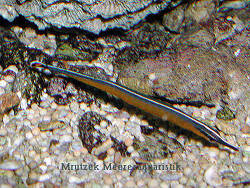
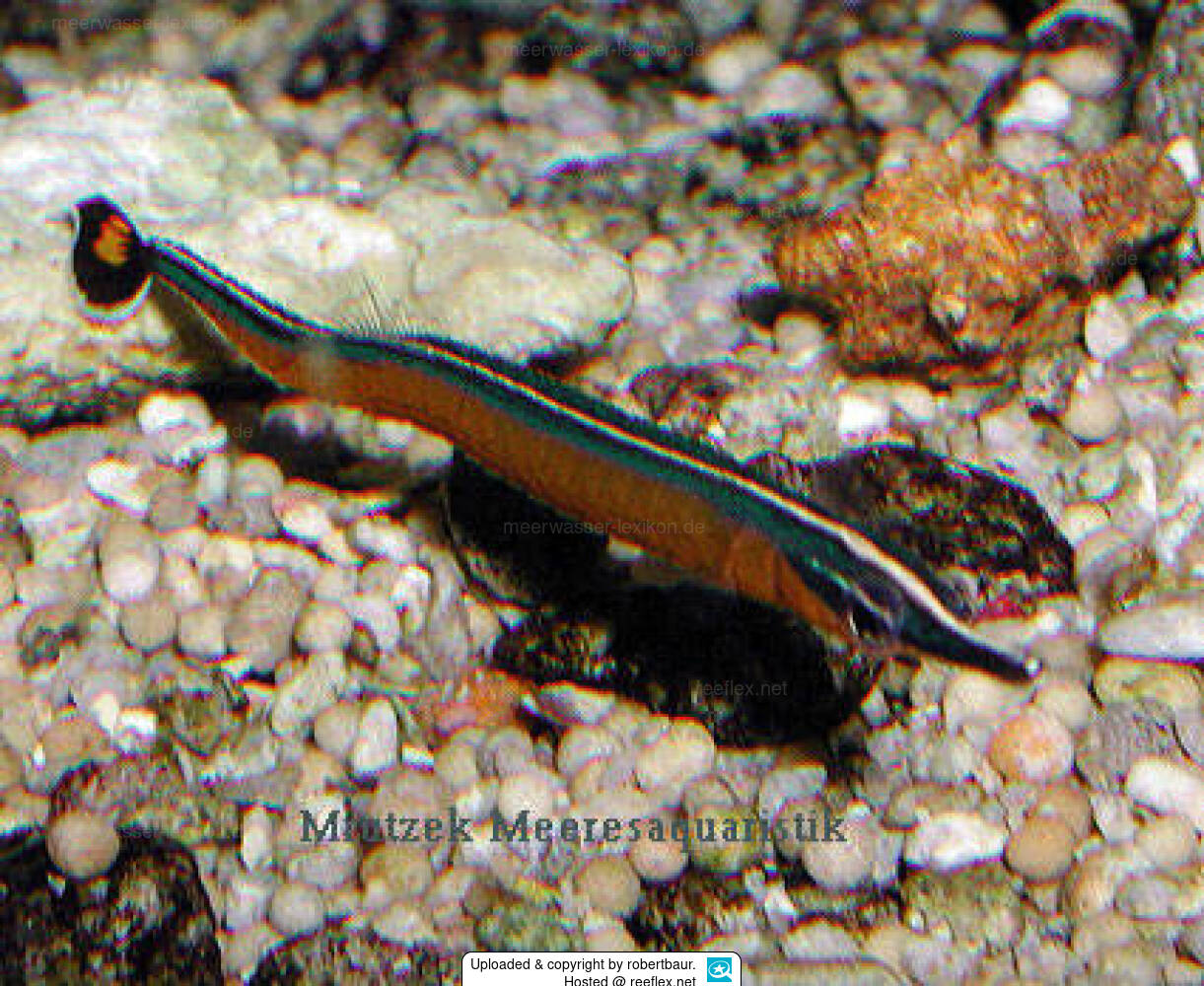
Doryrhamphus malus
We do not yet have any information about successfully keeping this species of pipefish in a saltwater aquarium, but it should be possible to keep them, initially with various live foods, preferably in a species tank.
Due to the same size, the husbandry experience of Doryrhamphus excisus excisus should currently be used.
If the animals refuse to eat, you should of course try live food (Artemia and copepods e.g. Tigriopus californicus).
In any case, it is important to feed a lot and generously so that the animals are quickly fit again.
After a while, you can try gradually mixing small frozen food into the live food.
Sex and mating
As males and females can be distinguished by the bridge of the nose, mating is possible and should be practiced. The male has small bumps on the bridge of the nose, which can be recognized from a size of approx. 4 cm.
But never put two males or two females together, they will chase/fight each other until the weaker animal dies.
As a general rule, these animals should not be kept in a tank with lots of large and fast-eating fish, as they are rather slow and cautious eaters.
A real rarity, very rarely available in the trade.
Feeding intake.
The fish take a long time to eat at the beginning, before the food is taken up, a close inspection is carried out. After acclimatisation, the offered frozen food is eaten without problems. It should be noted that wild-caught fish behave differently than offspring when it comes to food intake. In the case of offspring, the size of the fish purchased also plays a role in the choice of food.
According to Kuiter's description:
Known only from Queensland in shallow reefs and lagoons.
FishBase does not have a photo, but gives a somewhat wider distribution, endmixed in Australia from Mackay Reef to the Masthead Islands in the Great Barrier Reef and Queensland.
We do not yet have any information about successfully keeping this species of pipefish in a saltwater aquarium, but it should be possible to keep them, initially with various live foods, preferably in a species tank.
Due to the same size, the husbandry experience of Doryrhamphus excisus excisus should currently be used.
If the animals refuse to eat, you should of course try live food (Artemia and copepods e.g. Tigriopus californicus).
In any case, it is important to feed a lot and generously so that the animals are quickly fit again.
After a while, you can try gradually mixing small frozen food into the live food.
Sex and mating
As males and females can be distinguished by the bridge of the nose, mating is possible and should be practiced. The male has small bumps on the bridge of the nose, which can be recognized from a size of approx. 4 cm.
But never put two males or two females together, they will chase/fight each other until the weaker animal dies.
As a general rule, these animals should not be kept in a tank with lots of large and fast-eating fish, as they are rather slow and cautious eaters.
A real rarity, very rarely available in the trade.
Feeding intake.
The fish take a long time to eat at the beginning, before the food is taken up, a close inspection is carried out. After acclimatisation, the offered frozen food is eaten without problems. It should be noted that wild-caught fish behave differently than offspring when it comes to food intake. In the case of offspring, the size of the fish purchased also plays a role in the choice of food.
According to Kuiter's description:
Known only from Queensland in shallow reefs and lagoons.
FishBase does not have a photo, but gives a somewhat wider distribution, endmixed in Australia from Mackay Reef to the Masthead Islands in the Great Barrier Reef and Queensland.