


 Anne Frijsinger & Mat Vestjens, Holland

Info
Thompson, 1898
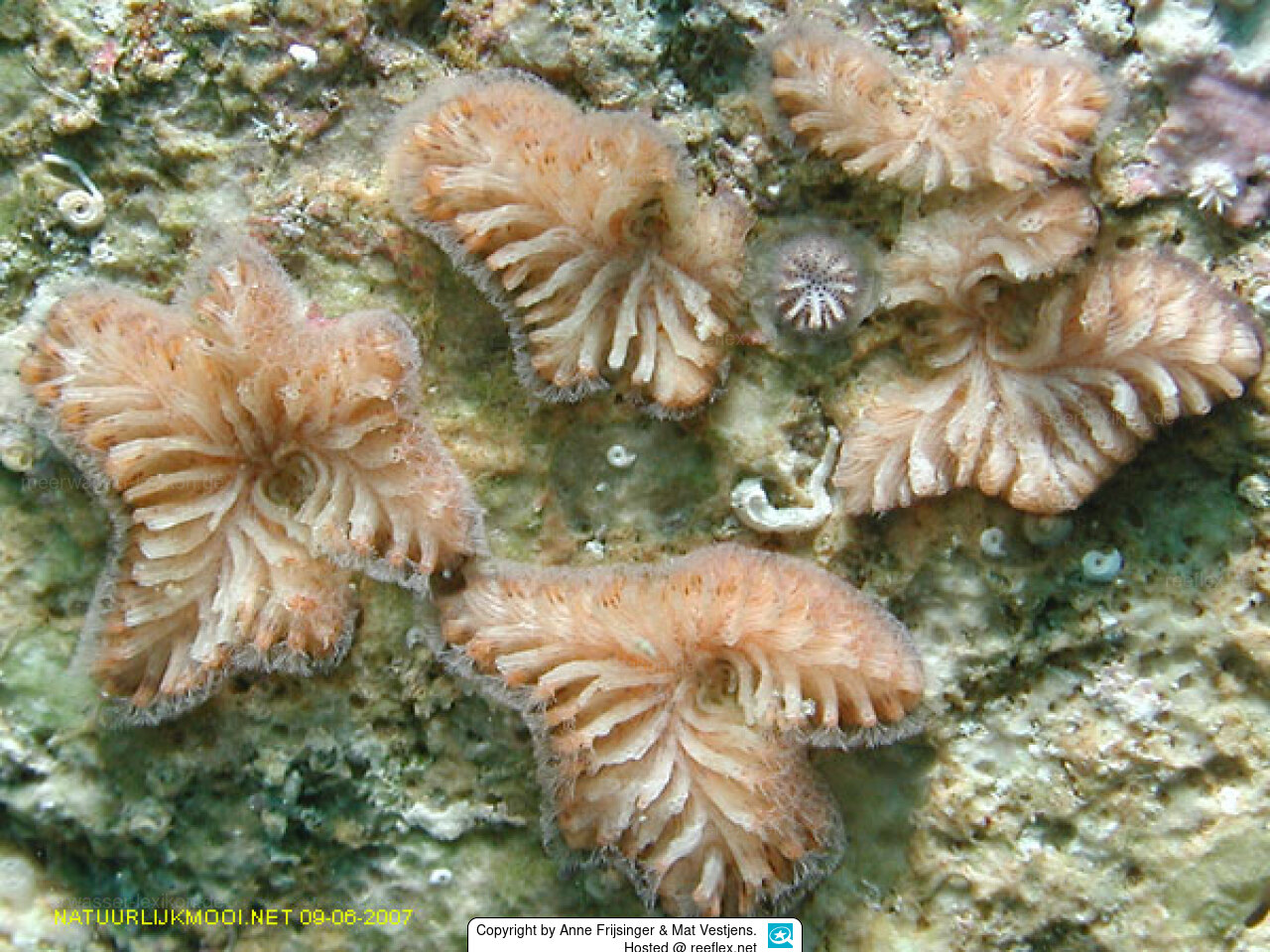
This bryozoan is found from Sweden in Northern Europe via the British Isles, Portugal, and Spain to the Mediterranean Sea (Adriatic Sea), settling at depths of approximately 2 to 40 meters and tolerating varying salinity levels in seawater.
It has feeding zooids in its tentacle crown, gonozooids, and defense zooids with stinging cells. It is a suspension feeder from the Tubuliporidae family and can reproduce sexually and asexually.
Since bryozoans do not need light to grow, they can actively avoid competition for space from algae by settling under rock overhangs and in other shaded areas with stronger currents.
The predators of bryozoans are various nudibranchs, sea urchins, and small crustaceans such as ghost shrimp and isopods.
This bryozoan is found from Sweden in Northern Europe via the British Isles, Portugal, and Spain to the Mediterranean Sea (Adriatic Sea), settling at depths of approximately 2 to 40 meters and tolerating varying salinity levels in seawater.
It has feeding zooids in its tentacle crown, gonozooids, and defense zooids with stinging cells. It is a suspension feeder from the Tubuliporidae family and can reproduce sexually and asexually.
Since bryozoans do not need light to grow, they can actively avoid competition for space from algae by settling under rock overhangs and in other shaded areas with stronger currents.
The predators of bryozoans are various nudibranchs, sea urchins, and small crustaceans such as ghost shrimp and isopods.

