


 PLoS ONE | www.plosone.org


Info
Hydrophis belcheri (Gray, 1849)
Hydrophis belcheri (Gray, 1849)
Hydrophis belcheri, commonly known as the pale-banded sea snake or Belcher's sea snake, is an extremely venomous species of sea snake. It is shy and usually has to be severely mistreated before it bites. Most bites occur to fishermen handling nets, but only about a quarter of those bitten are actually poisoned, as the snake rarely injects large amounts of venom. Although little is known about the venom of this species, the LD50 toxicity in mice after intramuscular administration has been determined to be 0.24 mg/kg.
Hydrophis belcheri is a venomous sea snake that snorkelers and divers should give a wide berth. Its bite can lead to life-threatening myolysis if the bitten person is not treated with an existing antivenom. After a bite, a number of physical symptoms are possible, including nausea, vomiting, diarrhea, abdominal pain, headache, dizziness, and circulatory disorders, even collapse. Bitten persons must be taken to a hospital as quickly as possible.
The Belcher's sea snake, often mistakenly referred to as the hook-nosed sea snake (Enhydrina schistosa), was erroneously known as the most venomous snake in the world due to the 1996 book “Snakes in Question: The Smithsonian Answer Book” by Ernst and Zug. Renowned snake expert Bryan Grieg Fry, associate professor, has clarified this error: "The myth of the hook-nosed sea snake was based on a fundamental error in the book ‘Snakes in Question’. It summarized all the results of toxicity tests, regardless of the test method (e.g., subcutaneous, intramuscular, intravenous, or intraperitoneal). Since the test method can influence the relative numbers, venoms can only be compared within a single test method. Otherwise, it's like comparing apples and oranges." Studies on mice and human heart muscle cell cultures show that the inland taipan's venom, drop for drop, is the most toxic of all snakes – whether on land or in water. However, the most toxic sea snake is the Dubois sea snake (Aipysurus duboisii).
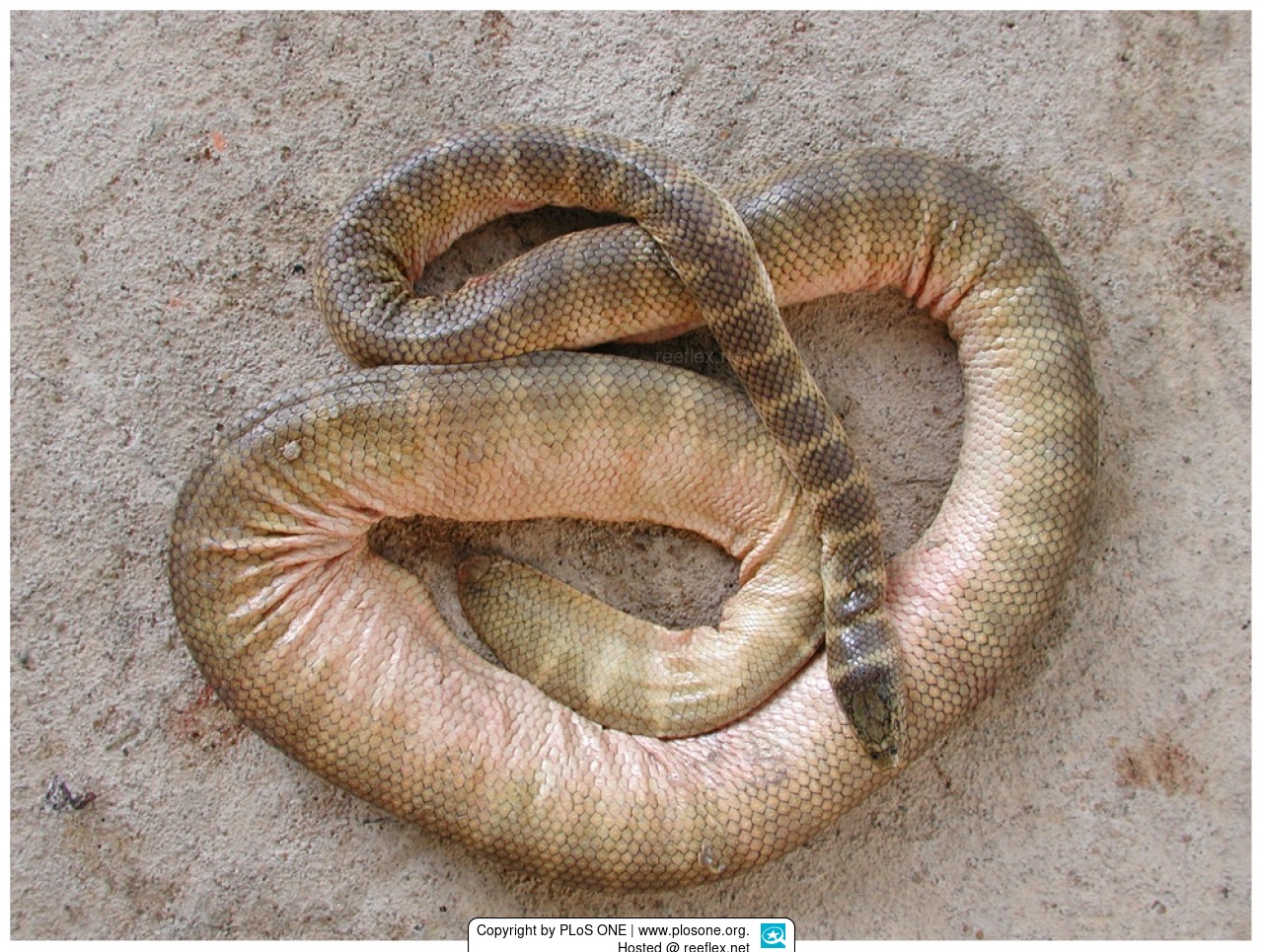
The Belcher's sea snake is medium-sized and reaches a length of 0.5 to 1 meter when fully grown. Its slender body is usually chrome yellow with dark green horizontal stripes. The pattern on its back does not extend to its belly. Its head is short and has bands in the same colors. The mouth is very small but adapted to life in water. Out of the water, the body appears faintly yellowish. Unlike most other snake species, the scales overlap. Each dorsal scale has a central hump. The body is strongly flattened laterally towards the rear. The ventral scales are very narrow, only slightly wider than the dorsal scales.
This species was first described and named by John Edward Gray in 1849. The genus name “hydrophis” comes from the Greek: water + (ophis) = snake.
The species name “belcheri” commemorates the Nova Scotia-born Royal Navy captain, later Admiral Sir Edward Belcher KCB, RN (1799–1877), who collected the holotype.
Synonym:
Aturia belcheri Gray, 1849 · unaccepted
Hydrophis belcheri (Gray, 1849)
Hydrophis belcheri, commonly known as the pale-banded sea snake or Belcher's sea snake, is an extremely venomous species of sea snake. It is shy and usually has to be severely mistreated before it bites. Most bites occur to fishermen handling nets, but only about a quarter of those bitten are actually poisoned, as the snake rarely injects large amounts of venom. Although little is known about the venom of this species, the LD50 toxicity in mice after intramuscular administration has been determined to be 0.24 mg/kg.
Hydrophis belcheri is a venomous sea snake that snorkelers and divers should give a wide berth. Its bite can lead to life-threatening myolysis if the bitten person is not treated with an existing antivenom. After a bite, a number of physical symptoms are possible, including nausea, vomiting, diarrhea, abdominal pain, headache, dizziness, and circulatory disorders, even collapse. Bitten persons must be taken to a hospital as quickly as possible.
The Belcher's sea snake, often mistakenly referred to as the hook-nosed sea snake (Enhydrina schistosa), was erroneously known as the most venomous snake in the world due to the 1996 book “Snakes in Question: The Smithsonian Answer Book” by Ernst and Zug. Renowned snake expert Bryan Grieg Fry, associate professor, has clarified this error: "The myth of the hook-nosed sea snake was based on a fundamental error in the book ‘Snakes in Question’. It summarized all the results of toxicity tests, regardless of the test method (e.g., subcutaneous, intramuscular, intravenous, or intraperitoneal). Since the test method can influence the relative numbers, venoms can only be compared within a single test method. Otherwise, it's like comparing apples and oranges." Studies on mice and human heart muscle cell cultures show that the inland taipan's venom, drop for drop, is the most toxic of all snakes – whether on land or in water. However, the most toxic sea snake is the Dubois sea snake (Aipysurus duboisii).
The Belcher's sea snake is medium-sized and reaches a length of 0.5 to 1 meter when fully grown. Its slender body is usually chrome yellow with dark green horizontal stripes. The pattern on its back does not extend to its belly. Its head is short and has bands in the same colors. The mouth is very small but adapted to life in water. Out of the water, the body appears faintly yellowish. Unlike most other snake species, the scales overlap. Each dorsal scale has a central hump. The body is strongly flattened laterally towards the rear. The ventral scales are very narrow, only slightly wider than the dorsal scales.
This species was first described and named by John Edward Gray in 1849. The genus name “hydrophis” comes from the Greek: water + (ophis) = snake.
The species name “belcheri” commemorates the Nova Scotia-born Royal Navy captain, later Admiral Sir Edward Belcher KCB, RN (1799–1877), who collected the holotype.
Synonym:
Aturia belcheri Gray, 1849 · unaccepted

