


 Stuart Clarke


Info
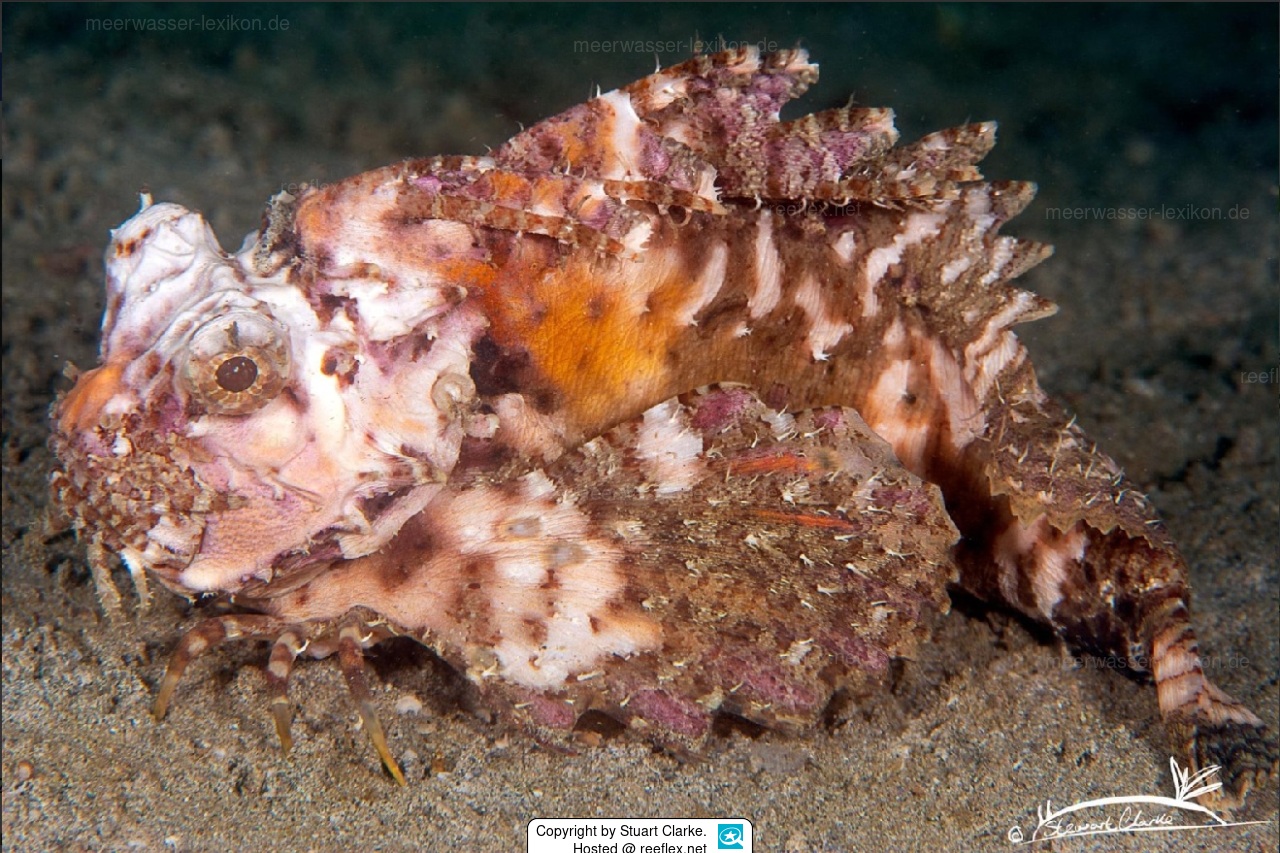
Choridactylus multibarbus is a stealthy ambush predator that is difficult to spot and can burrow into sandy or muddy bottoms up to the level of its high-set eyes.
Particularly striking are its pectoral fin rays, which resemble “claws” and enable the stonefish to move slowly.
The body of the orange-striped anglerfish is elongated and moderately compressed laterally; its head is relatively small.
The three lower pectoral fin rays are free and separated from the rest of the fin; the uppermost pectoral fin ray is not thread-like in adult specimens.
Color:
The body is yellowish to brownish, with yellow to reddish markings on the shoulder. The underside of the pectoral fin features about five elongated white areas, surrounded by black or brown pigment, and usually with white spots in the axillary region.
This highly venomous species is available in specialty stores and should, if at all, only be kept by extremely experienced aquarists.
Choridactylus multibarbus should only be kept in a large aquarium with other fish that do not present tempting prey for its large, sucker-like mouth and are better kept alone
Extreme caution should be exercised with the dorsal, pelvic, and anal spines, as they can cause a painful and potentially dangerous sting.
Choridactylus multibarbus is sold in small quantities at regional markets, either fresh or dried and salted.
Synonyms:
Choridactylus multibarbis Richardson, 1848 · unaccepted (misspelling)
Chorismodactylus multibarbis Gunther, 1860 · unaccepted
Chorismodactylus multibarbus Bleeker, 1873 · unaccepted
Special thanks for the first photo of this highly venomous stonefish go to Stewart Clarke, iNaturalist
Particularly striking are its pectoral fin rays, which resemble “claws” and enable the stonefish to move slowly.
The body of the orange-striped anglerfish is elongated and moderately compressed laterally; its head is relatively small.
The three lower pectoral fin rays are free and separated from the rest of the fin; the uppermost pectoral fin ray is not thread-like in adult specimens.
Color:
The body is yellowish to brownish, with yellow to reddish markings on the shoulder. The underside of the pectoral fin features about five elongated white areas, surrounded by black or brown pigment, and usually with white spots in the axillary region.
This highly venomous species is available in specialty stores and should, if at all, only be kept by extremely experienced aquarists.
Choridactylus multibarbus should only be kept in a large aquarium with other fish that do not present tempting prey for its large, sucker-like mouth and are better kept alone
Extreme caution should be exercised with the dorsal, pelvic, and anal spines, as they can cause a painful and potentially dangerous sting.
Choridactylus multibarbus is sold in small quantities at regional markets, either fresh or dried and salted.
Synonyms:
Choridactylus multibarbis Richardson, 1848 · unaccepted (misspelling)
Chorismodactylus multibarbis Gunther, 1860 · unaccepted
Chorismodactylus multibarbus Bleeker, 1873 · unaccepted
Special thanks for the first photo of this highly venomous stonefish go to Stewart Clarke, iNaturalist

