Anzeige
Korallenriff Banner

Palythoa-sp. 06 Palythoa-Sp. 05

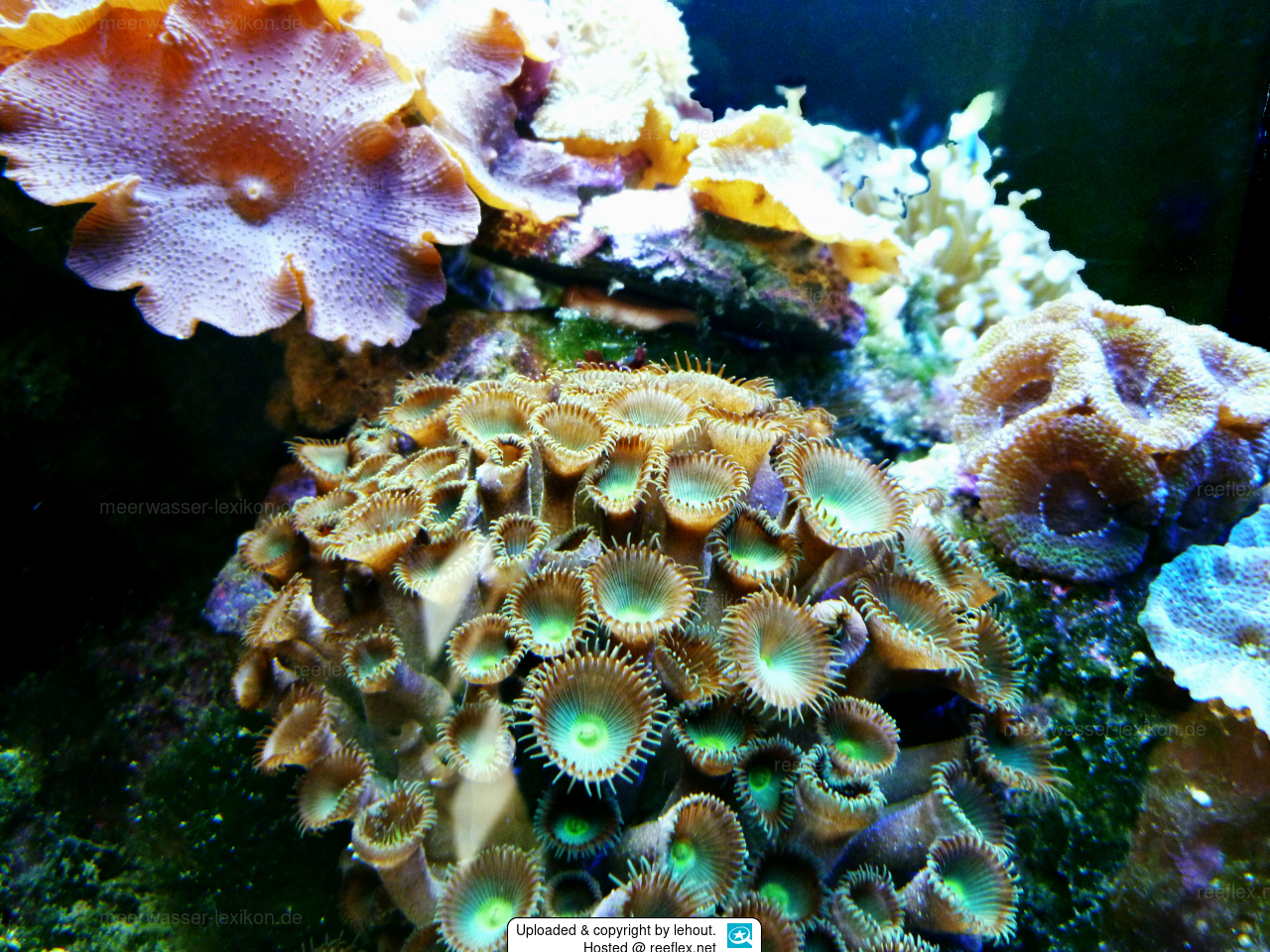
Palythoa-sp. 06 is commonly referred to as Palythoa-Sp. 05. Difficulty in the aquarium: facile. A aquarium size of at least 100 Liter is recommended. Toxicity: Highly toxic.


Profilbild Urheber lehout

Protopalythoa sp. 05

Protopalythoa sp. 05


Uploaded by lehout.

Image detail


Profile

lexID:
1893 
AphiaID:
Scientific:
Palythoa-sp. 06 
German:
Krustenanemone 
English:
Palythoa-Sp. 05 
Category:
Anémones coloniales 
Family tree:
Palythoa-sp. (Genus) > 06 (Species) 
Occurrence:
Indonesia 
Sea depth:
Meter 
Size:
0.79" - 1.18" (2cm - 3cm) 
Temperature:
73.4 °F - 78.8 °F (23°C - 26°C) 
Food:
Plankton, Zooxanthellae / Light 
Tank:
22 gal (~ 100L)  
Difficulty:
facile 
Offspring:
Possible to breed 
Toxicity:
Highly toxic 
CITES:
Not evaluated 
More related species
in this lexicon
:
 
Author:
Publisher:
Meerwasser-Lexikon.de
Created:
Last edit:
2021-01-11 23:08:19 

Élevages

Des élevages de Palythoa-sp. 06 sont possibles. Malheureusement il y en a pas assez pour le commerce. Si vous vous intéressez pour Palythoa-sp. 06 demandez a votre commerçant du élevage. Si vous avez déjà Palythoa-sp. 06 essayez vous même de faire un élevage! Vous pourriez aider au commerce et de protéger la nature.

Poison


Palythoa-sp. 06 est (très) toxique et peut vous tuer!!!! Si vous voulez avoir Palythoa-sp. 06 informez vous bien sur le venin et son action sur le corps. Gardez une notice avec le numéro du Centre Antipoison et toutes les informations sur l'espèce à coté de votre aquarium pour qu'en cas d'urgence on puisse aider rapidement.Le numéro du Centre Antipoison est trouvable ici: European Association of Poisons Centres and Clinical Toxicologists Ceci s'affiche chez des espèces toxiques où très toxiques. Chaque humain réagit différemment sur des venins. Evaluez donc bien le risque pour vous !!ET!! votre entourage! Ne badinez pas avec Palythoa-sp. 06

Info

Protopalythoa oder Palythoa is a genus in the Zoanthidae family.

Some Protopalythoa species can be highly toxic under certain circumstances, note to the Introduction section. Therefore, one should always be careful in dealing with Protopalythoa zoanthids (zoas).

Biota > Animalia (Kingdom) > Cnidaria (Phylum) > Anthozoa (Class) > Hexacorallia (Subclass) > Hexcorallia (Order) > Brachycnemina (Suborder) > Sphenopidae (Family) > Palythoa (Genus)

Pictures

Commonly


Husbandry know-how of owners

am 03.02.14#3
Sind bei mir erst durch Fütterung ( Staubfutter ) groß geworden. Wenn gefüttert wird, ziehen sie sich zusammen und öffnen sich wieder. Wenn ich im Aquarium mit ihnen in Berührung komme, wird anschließend mein Arm leicht taub ....
am 25.10.12#2
Vermehrt sich schnell und sollte nur mit Schutzmaßnahmen behandelt werden. Beim Ableger machen Schutzbrille, Mundschutz und Latexhandschuhe tragen: Kein Scherz. Wenn Palytoxin über die Schleimhäute ins Blut gelangt wirds kritisch.

Ansonsten sehr robust und einfach zu halten.
am 12.10.07#1
Wie alle Krustenanemonen einfach zu haltendes Tier , solange der Pfleger nicht mit Fadenalgen ( Bryopsis ? ) zu kämpfen hat . Bei mir wuchs Zoanthus sp. 05 aus Lebendgestein von hervorragender Qualität , laut Importliste Herkunft Indonesien , das ich von meinen Händler in Berlin ( Sea World Franke ) erhalten hatte . Aus den Steinen wuchs außerdem noch eine zweite Zoanthuskollonie ( Beschreibung folgt ) , eine mir bis Heute unbekannte Sinularia sp. ( Lederkoralle ) und die von mir schon beschriebene Xenia sp. ( Weichkoralle ) . So ist es nicht immer nötig für viel Geld zum Teil übels teure Tiere zu erwerben , sondern ein Paar lebende Steine machen es auch . Nun wünsche ich Euch viel Spass beim durchforsten des Lebendgesteinbestandes von euren Händlern und viel Glück .
3 husbandary tips from our users available
Show all and discuss

Qu'est ce que c'est?

The following is an overview of "what's that?" Entries that have been successfully determined and assigned to this entry. A look at the entertainments there is certainly interesting.