Anzeige
Fauna Marin GmbH Tunze Tropic Marin OMega Vital Whitecorals.com Cyo Control

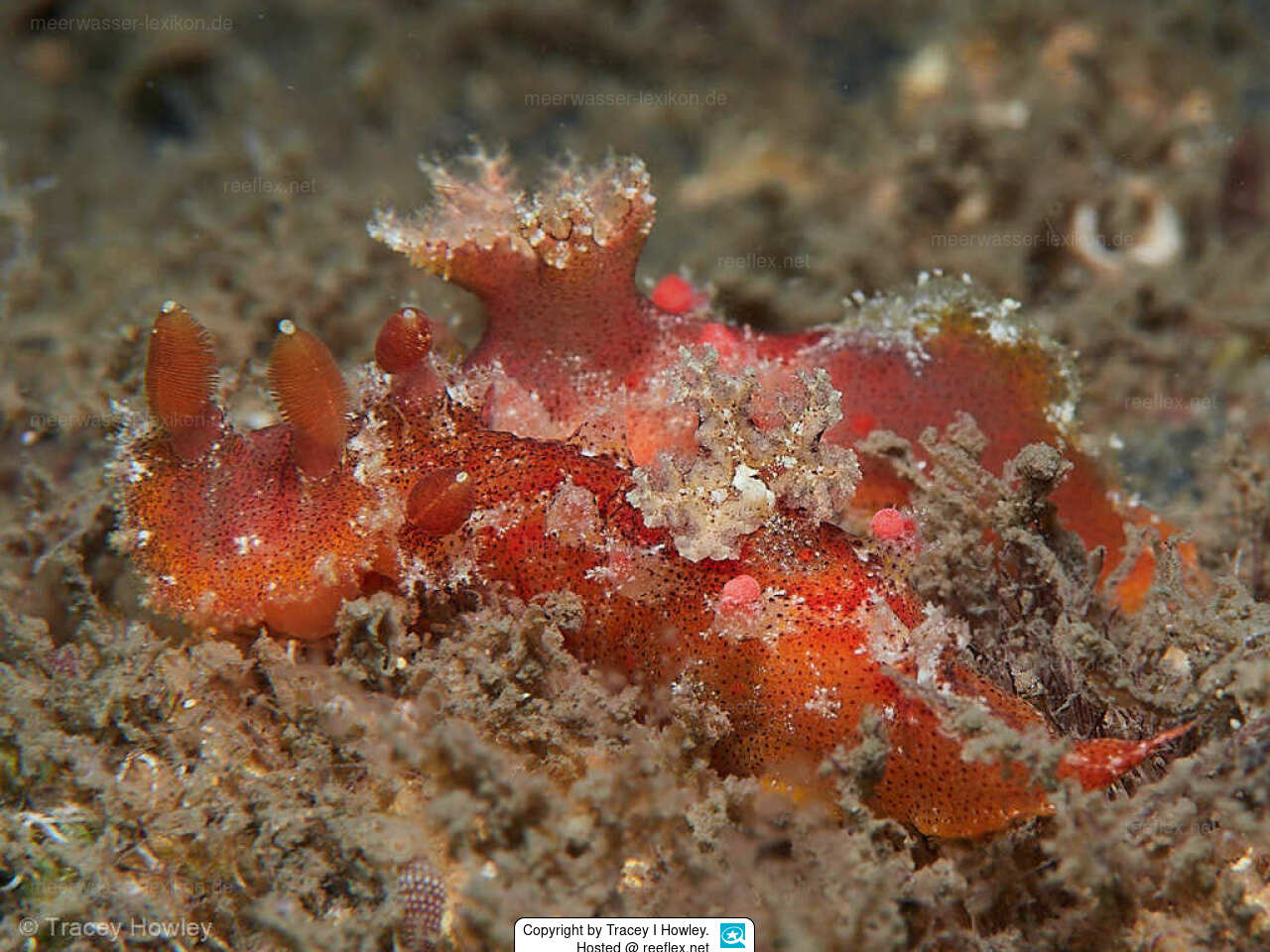
Plocamopherus imperialis Imperial Plocamophe

Plocamopherus imperialis is commonly referred to as Imperial Plocamophe. Difficulty in the aquarium: Not suitable for aquarium keeping. Toxicity: Toxic hazard unknown.


Profilbild Urheber Tracey I Howley, Australia

Plocamopherus imperialis,Gold Coast QLD, Australia 2024


Courtesy of the author Tracey I Howley, Australia . Please visit www.inaturalist.org for more information.

Uploaded by Muelly.

Image detail


Profile

lexID:
8959 
AphiaID:
531273 
Scientific:
Plocamopherus imperialis 
German:
Majestätische Plocamopherus 
English:
Imperial Plocamophe 
Category:
Limaces de mer 
Family tree:
Animalia (Kingdom) > Mollusca (Phylum) > Gastropoda (Class) > Doridida (Order) > Polyceridae (Family) > Plocamopherus (Genus) > imperialis (Species) 
Initial determination:
Angas, 1864 
Occurrence:
Australia, Japan, New Zealand, Philippines, Queensland (Australia), South-Pazific, Tasman Sea, Tasmania (Australia), Vanuatu, Western Pacific Ocean 
Marine Zone:
Intertidal (Eulittoral), intertidal zone between the high and low tide lines characterized by the alternation of low and high tide down to 15 meters 
Sea depth:
- 10 Meter 
Habitats:
Seawater, Sea water 
Size:
0.59" - 3.94" (1.5cm - 10cm) 
Temperature:
69.8 °F - 77 °F (21°C - 25°C) 
Food:
Bryozoans (sea mats), Carnivore, Food specialist 
Difficulty:
Not suitable for aquarium keeping 
Offspring:
Not available as offspring 
Toxicity:
Toxic hazard unknown 
CITES:
Not evaluated 
Red List:
Not evaluated (NE) 
Related species at
Catalog of Life
:
 
More related species
in this lexicon
:
 
Author:
Publisher:
Meerwasser-Lexikon.de
Created:
Last edit:
2025-11-14 12:41:49 

Info

Plocamopherus imperialis Angas, 1864

Plocamopherus imperialis occurs throughout the tropical western Pacific.The body is elongate,orange coloured and mottled black.The gills are high set on the body and can not be withdrawn. The rhinophores are lamellate and can be contracted.This species usually found in 0-15m dephts.

Sea slugs genus Plocamopherus produce a luminesce flashes of light.How they do this is unknown.Plocamopherus slugs swims by laterally bending the body back and forth like a stranded fish.

Plocamopherus imperialis feeding bryozoans.

Synonym:
Plocamopherus naeavatus

External links

  1. Seaslugforum (en). Abgerufen am 02.03.2023.

Pictures

Commonly


Husbandry know-how of owners

0 husbandary tips from our users available
Show all and discuss