


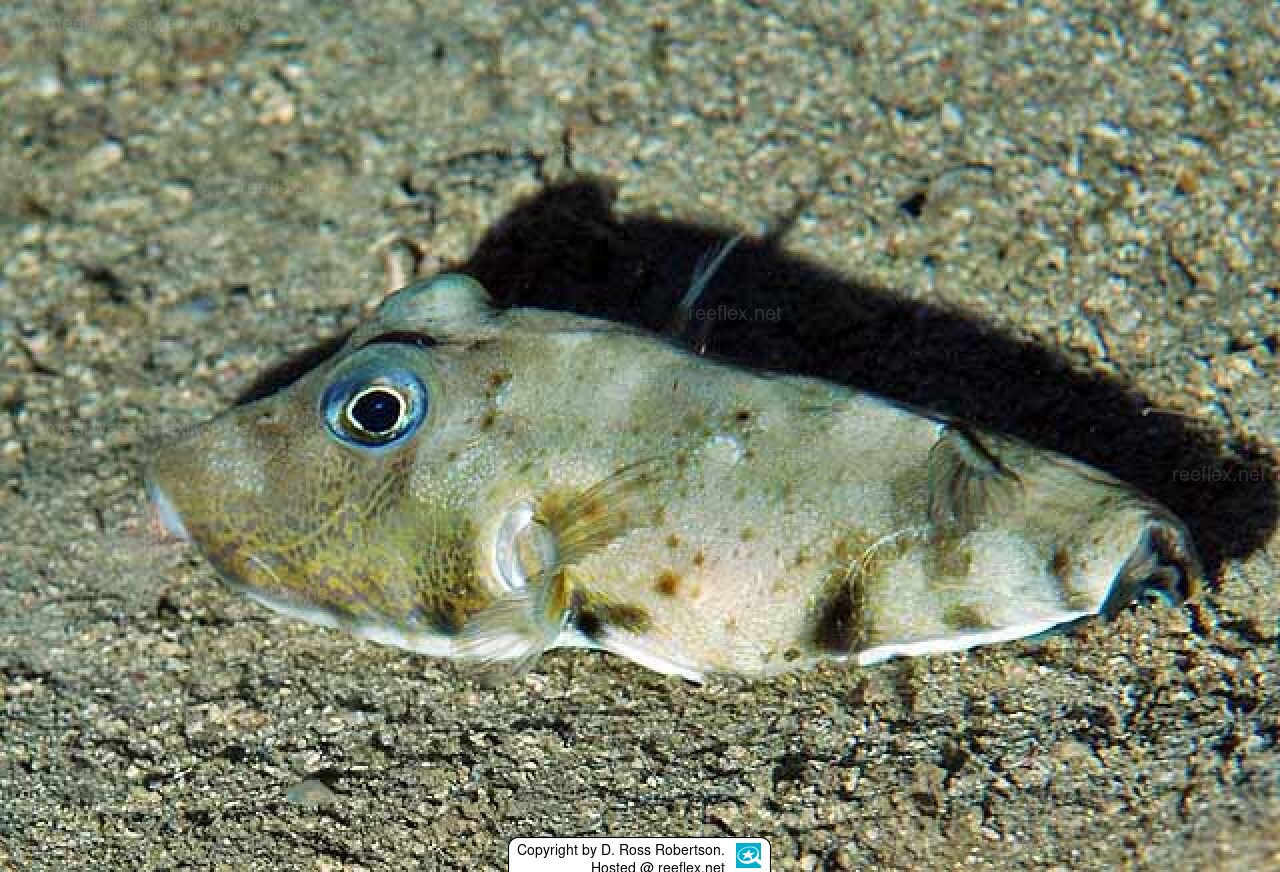
 Dr. D. Ross Robertson, Panama


Info
Sphoeroides dorsalis has a gray to light brown body coloration and a pair of black to light brown skin flaps on the upper back, as well as 1–5 diffuse, dark spots on the side behind the pectoral fin.
Males of the species can be distinguished from females by a ring-shaped marking on the cheek.
On the website “Shorefishes of the Greater Caribbean online information system”, a maximum water depth of up to 324 meters is given for Sphoeroides dorsalis. Unfortunately, we cannot find a source for this, so we have to rely on the information in FishBase.
Puffer fish can produce toxins such as tetrodotoxin and saxitoxin and accumulate them in the skin, gonads and liver.
The toxin tetrodotoxin, which is contained in the fugu, is 1000 times more toxic than cyanide and there is no antidote serum, death then occurs by respiratory paralysis
The degree of toxicity varies depending on the species, but also on the geographical area and season.
We recommend that you never prepare puffer fish yourself, as the risk of fatal poisoning is far too great.
If you still absolutely want to eat puffer fish meat (fugu), then the fish should only be slaughtered by a Japanese special chef with a license and several years of training.
Only the training of these special chefs can guarantee the correct slaughter, complete removal and proper disposal of all toxic parts of the fish.
Males of the species can be distinguished from females by a ring-shaped marking on the cheek.
On the website “Shorefishes of the Greater Caribbean online information system”, a maximum water depth of up to 324 meters is given for Sphoeroides dorsalis. Unfortunately, we cannot find a source for this, so we have to rely on the information in FishBase.
Puffer fish can produce toxins such as tetrodotoxin and saxitoxin and accumulate them in the skin, gonads and liver.
The toxin tetrodotoxin, which is contained in the fugu, is 1000 times more toxic than cyanide and there is no antidote serum, death then occurs by respiratory paralysis
The degree of toxicity varies depending on the species, but also on the geographical area and season.
We recommend that you never prepare puffer fish yourself, as the risk of fatal poisoning is far too great.
If you still absolutely want to eat puffer fish meat (fugu), then the fish should only be slaughtered by a Japanese special chef with a license and several years of training.
Only the training of these special chefs can guarantee the correct slaughter, complete removal and proper disposal of all toxic parts of the fish.

